Why Trade On Demo Before Live Trading

Yusef Scott
Written by Yusef Scott, Founder of SDEFX University™ and Creator of the Trading Framework™
If I could go back and speak to the younger version of myself before I ever placed a real trade, I would tell him this:
Learn first. Lose on demo—not in real life.
This is not simply advice that sounds responsible. It is the painful truth of my own journey.
When I first entered the markets, I was excited about the opportunity to make money. Like many new traders, I was focused on what I could earn before I fully understood what I could lose.
I did not know enough about market structure, risk management, trading psychology, entry qualification, or the discipline required to execute a plan consistently.
Instead of taking time to develop those skills on a demo account, I went directly into the live market.
That decision became expensive.
In this article, I am going to explain why demo trading should come first, what a trader should accomplish while practicing, and how using demo correctly can help you avoid some of the most painful and unnecessary lessons in trading.

My Expensive Lessons
When I first started trading, I did not understand the importance of demo trading.
I went directly into the live market—and won at first.
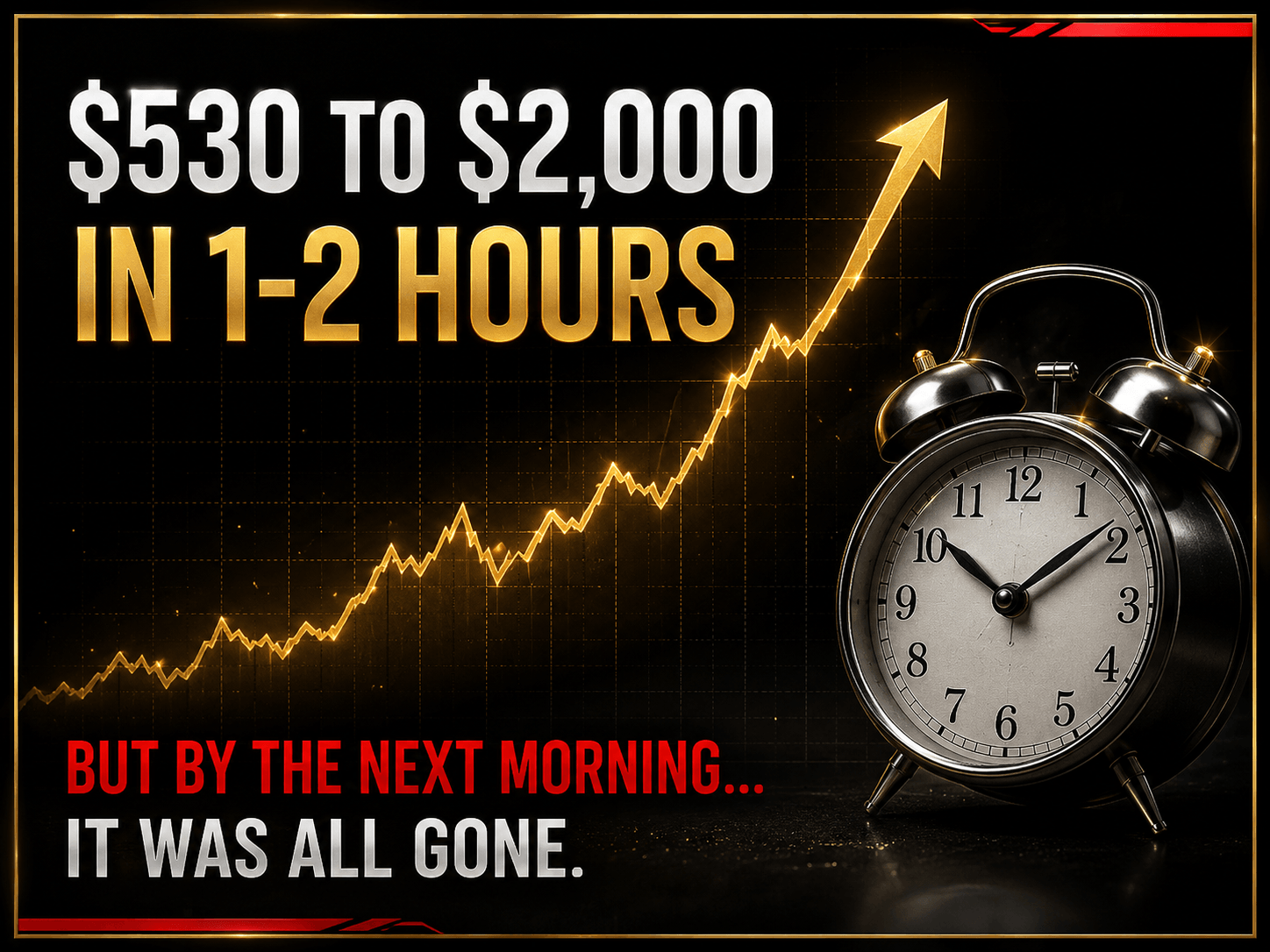
I took approximately $530 to $2,000 within one or two hours. At that moment, I felt like a genius.
I believed I had figured trading out.
But by the following morning, I had given the money back.
That was only the beginning.
I continued to lose money in multiple trading accounts. Some of those accounts contained significant amounts of money. Every loss came with more emotional pressure, more confusion, and more frustration.
Those costly lessons could have been experienced on a demo account without placing real capital at risk.

Trading live before you are prepared forces you to learn while under pressure.
You are no longer simply evaluating the market. You are also dealing with fear, urgency, financial expectations, and the emotional weight of knowing that every decision can cost you real money.
That pressure can cause you to:
Second-guess qualified setups
Enter trades too early
Exit trades too quickly
Move stops for emotional reasons
Increase position sizes impulsively
Avoid valid entries because of previous losses
Overtrade while trying to recover money
Your confidence begins to suffer.
Your trading psychology becomes unstable.
You may become afraid to pull the trigger—or overcompensate by becoming too aggressive.
Either way, your trading edge begins to disappear.
Why Demo Comes First
Whatever you can learn on a live account can first be practiced on a demo account.
The primary difference is that your early mistakes do not have to create immediate financial consequences.
A demo account gives you room to learn the process before adding the emotional pressure of real money.
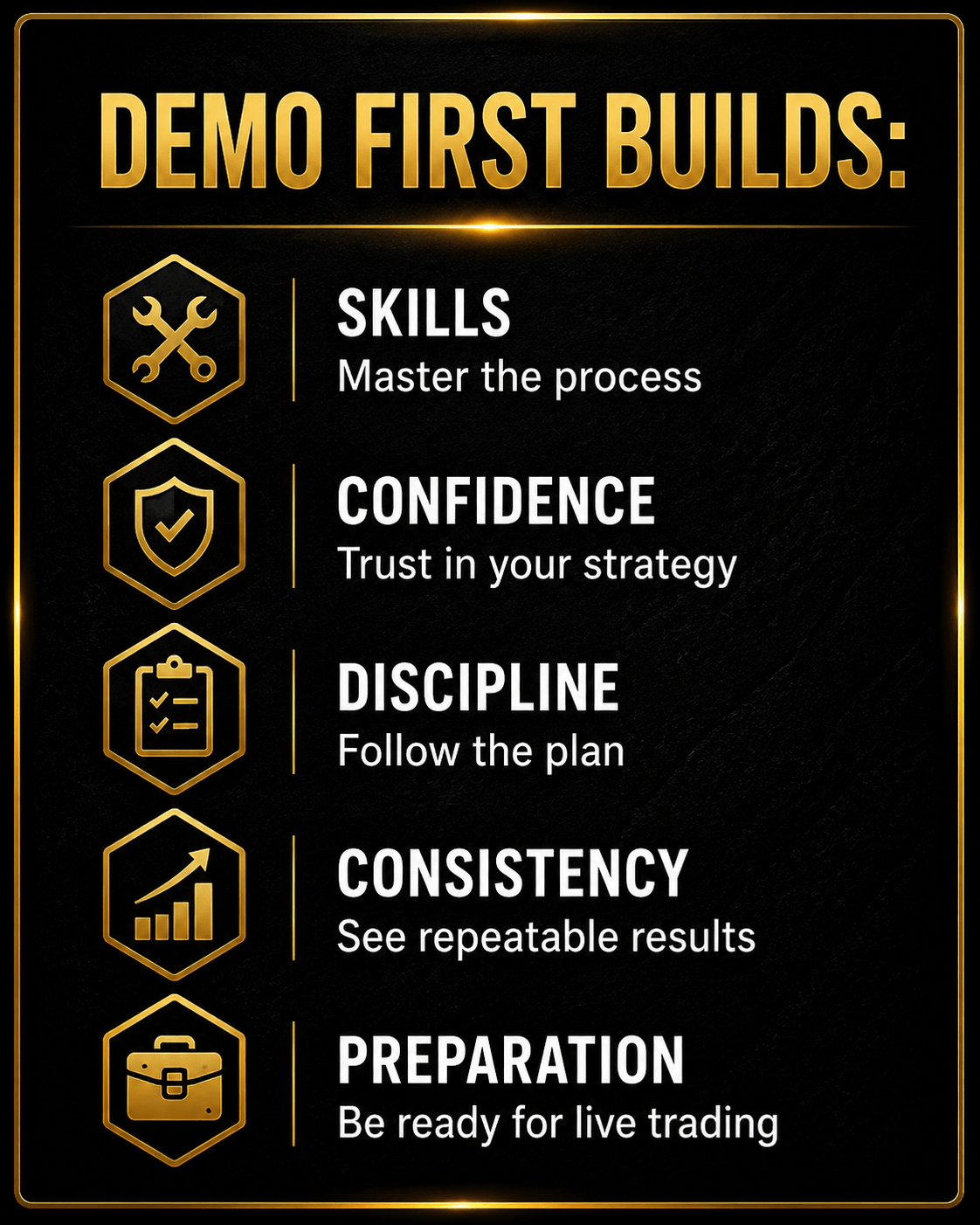
While trading on demo, you can:
Learn the trading strategy
Practice identifying qualified setups
Practice money and risk management
Learn how position sizing works
Build confidence in your execution
Make mistakes without losing capital
Refine your mindset
Practice following a written plan
Learn how to manage an open position
Review your trades objectively
Develop consistency through repetition
Demo trading is your training ground. It is where you build the foundation before stepping into the arena.
Demo should not be treated like a video game.
It should be treated with the same seriousness, structure, and discipline you intend to use when trading live.
That means using realistic position sizes, respecting stop conditions, following your strategy, documenting your decisions, and reviewing your performance.
The habits you practice on demo can eventually become the habits you carry into a live account.
If you trade recklessly on demo, you are practicing recklessness.
If you trade with structure on demo, you are practicing professionalism.
A Student Who Did It Right
One of my students joined my annual membership several years ago.
He made a decision that changed the direction of his trading development.
He stayed on demo for an entire year.
He did not rush simply because he was excited to trade real money.
He studied.
He practiced.
He showed up consistently.
He allowed himself time to understand the strategy and strengthen his execution.
He did not go live until he had developed consistent results and greater confidence in his process.
Today, he trades live with more confidence and consistency because he paid the price in practice—not through avoidable financial losses.
This student understood something many beginners overlook:
The goal is not to begin trading live as quickly as possible. The goal is to become prepared enough to trade live responsibly.
Taking longer to prepare is not failure.
Studying longer is not falling behind.
Practicing until the process becomes familiar is not wasted time.
It is an investment in your future execution.
Bypass the Painful Lessons
You do not have to pay real money for every lesson the market has to teach you.
Many beginner mistakes can be recognized, reviewed, and corrected on demo.
By starting on demo, you can:
Protect your capital
Protect your confidence
Practice making decisions without financial panic
Learn how your strategy behaves
Build real execution skills
Experience winning and losing trades
Recognize your emotional tendencies
Learn to follow risk limits
Avoid the emotional roller coaster of premature live trading
Prepare yourself for long-term development
Do not pay tuition to the market when demo can be your teacher.
The live market does not forgive poor preparation.
When real money is involved, every weakness in your process becomes more visible.
If you have not learned to respect your rules on demo, it is unlikely that adding financial pressure will suddenly make you more disciplined.
If you cannot manage a demo trade according to your plan, a live account will not automatically improve your decision-making.
Demo gives you an opportunity to expose those weaknesses before they become expensive.

Treat Trading Like a University
That is why I created SDEFX University™.
Trading should be approached like a serious education—not like a quick-money opportunity.
Treat it like a four-year university.
You would not apply for a professional position before acquiring the knowledge and training required to perform the job.
Trading should be approached with the same level of respect.
Come serious.
Come ready to learn.
Study the material.
Practice the strategy.
Review your mistakes.
Ask questions.
Develop your discipline.
Build your confidence.
Take three to six months—or however long your development requires—to learn, practice, and become more competitive.
There is no universal deadline that determines when every trader should go live.
The correct time is not based solely on how long you have been practicing.
It should be based on the quality and consistency of your execution.
Questions to Ask Before Going Live
Before moving from demo to a live account, ask yourself:
Can I identify my qualified setup without guessing?
Can I explain why I am entering the trade?
Do I know where the trade becomes invalid?
Can I calculate my risk before entering?
Can I follow my position-sizing rules consistently?
Can I accept a losing trade without abandoning my plan?
Can I remain patient when no qualified opportunity exists?
Do I document and review my trades?
Am I consistently following the same process?
Have I demonstrated discipline over a meaningful sample of trades?
If the answer to several of these questions is no, more preparation may be required.

Be disciplined.
Be serious.
You know when you are giving the process your full effort and when you are not.
Your trading results will eventually reflect the habits you repeatedly practice.
Stack While You Study
One of the greatest advantages of demo trading is that it allows you to develop your skills while continuing to build your financial foundation.
You do not have to place your savings at risk simply because you have started learning how to trade.
You can study while you save.
You can practice while you build your account.
You can strengthen your process before increasing your buying power.
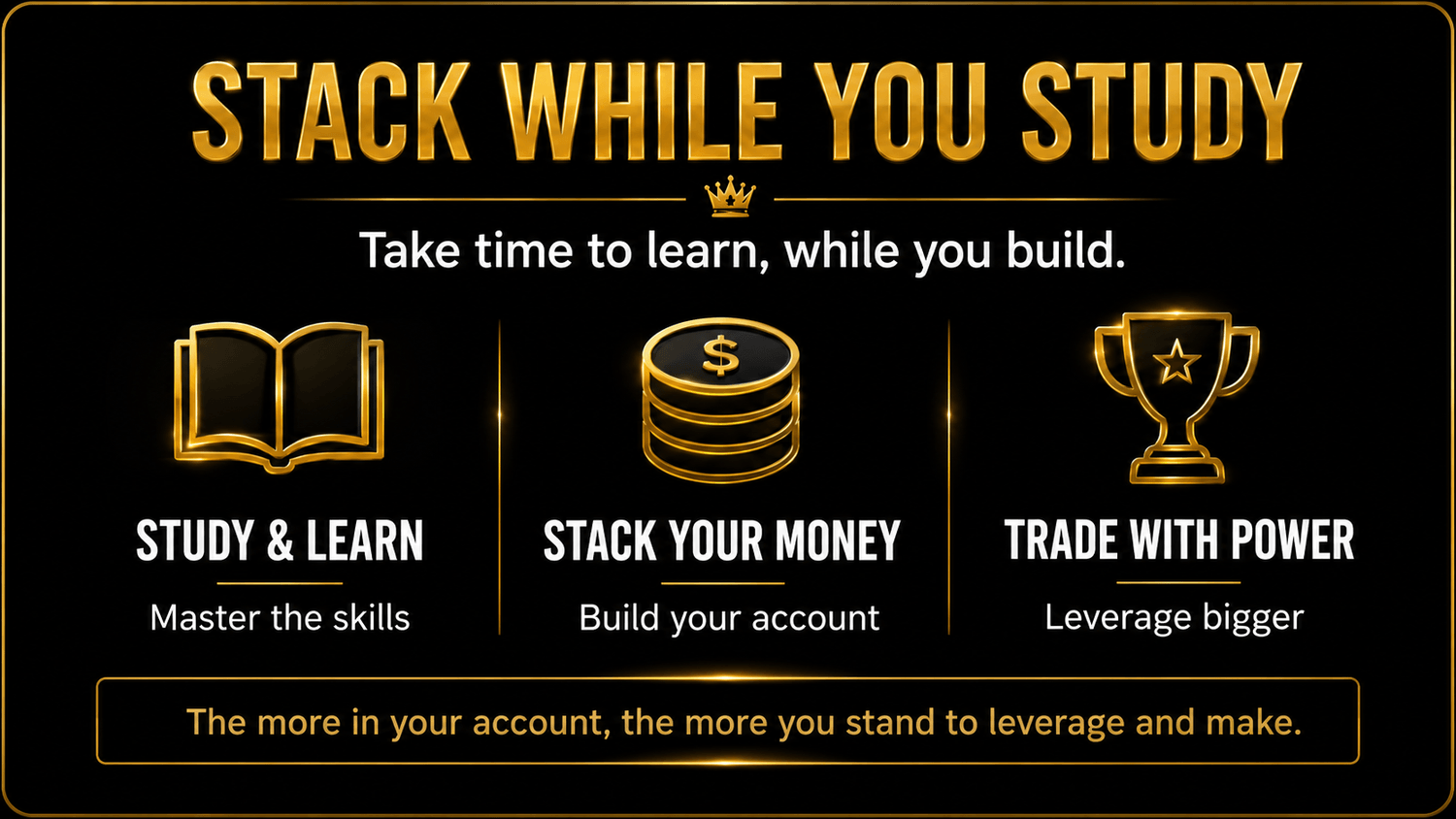
Three-Part Framework
Study and Learn
Master the skills, terminology, strategy, and decision-making process.
Stack Your Money
Continue building the capital you may eventually use when you are properly prepared.
Trade With Greater Buying Power
Enter the live market with more knowledge, more discipline, and a stronger financial foundation.
The more capital you eventually manage, the more important discipline becomes.
Starting with real money too early can reduce your capital before your skills have had time to develop.
Demo gives you time to improve your knowledge while protecting the resources you may need later.
The Truth About Risk and Reward
Support and resistance do more than help me identify where an opportunity may exist.
They also help me recognize when no trade is necessary.
When price is not at one of my qualified locations, I do not need to manufacture a setup.
I do not need to enter because I am bored.
I do not need to enter simply because the market is open.
I do not need to chase a candle because someone else posted a profitable trade.
I can wait.
That patience is one of the greatest benefits of building a trading process around levels.
A trader without defined locations can create a reason to enter almost anywhere.
A trader with defined locations understands that most market movement does not require participation.
This discipline can help reduce chasing, emotional entries, revenge trading, constant directional switching, entering in the middle of a range, and opening multiple positions without a valid structural reason.
The objective is not to take the greatest number of trades.
The objective is to take the opportunities that satisfy the requirements.
One highly qualified trade can be more valuable than ten emotional entries.
The CFTC warns that retail forex trading can involve substantial risk, that leverage can magnify losses, and that transaction costs and frequent trading can work against retail participants. Read the CFTC’s retail forex advisory.

Demo Trading Is Not About Perfection
emo trading does not mean you must win every trade before moving to a live account.
That is not realistic.
Losing trades are part of trading.
The purpose of demo is not to create the illusion that losses can be eliminated.
The purpose is to determine whether you can follow your process consistently.
A trader may be ready to progress when they can:
Follow a clearly defined strategy
Apply consistent risk limits
Avoid impulsive entries
Accept losses without revenge trading
Remain patient between opportunities
Review mistakes honestly
Execute the same process repeatedly
Demonstrate consistency over time
The question is not:
“Did I win every demo trade?”
The better question is:
“Did I follow my framework and execute the trade correctly?”
Process must come before performance.
Why Demo Results and Live Results Can Feel Different
A demo account can teach you the mechanics and structure of trading, but live trading introduces a new emotional element.
When real money is involved, traders may experience:
Greater fear of losing
More urgency to protect open profit
Hesitation before entering
Increased temptation to move stops
Anxiety during pullbacks
Pressure to recover losses
The desire to increase size after a win
This is why success on demo should not lead to immediate overconfidence.
The transition to live trading should be controlled.
A trader may begin with smaller exposure while learning how their emotions respond to real financial risk.
The goal is to transfer the discipline practiced on demo into the live environment.
How Long Should You Trade on Demo?
There is no single time requirement that applies to every trader.
One person may need several months.
Another may need a year or longer.
The duration is less important than the quality of the trader’s development.
Do not move to live trading simply because a certain number of weeks has passed.
Consider progressing when you can demonstrate:
A repeatable trading process
Consistent risk management
A meaningful sample of documented trades
Emotional control during wins and losses
Patience when no setup exists
A clear understanding of your entry and exit conditions
Consistent adherence to your Trading Framework™
Time alone does not prepare a trader.
Structured repetition does.
Ready to Start Your Trading Education the Right Way?
Join the FREE One Trade Away Mastermind and receive an introduction to the Trading Framework™—the six connected components designed to help traders approach the market with greater structure, discipline, and purpose.
Final Thoughts
Demo trading is not a punishment.
It is not a sign that you are not a real trader.
It is not something to rush through so you can finally begin making money.
Demo trading is part of your education.
It gives you the opportunity to build skills, confidence, patience, discipline, and consistency without placing your financial future at unnecessary risk.
Learn the strategy.
Practice the process.
Build your confidence.
Strengthen your discipline.
Document your performance.
Prepare yourself properly.
Then, when the time comes to transition to live trading, you will be entering the market with more than excitement.
You will be entering with a foundation.
Demo first. Discipline always. Dominate for life.
Risk Disclosure
Trading forex, indices, contracts for difference, futures, and other leveraged financial products involves substantial risk and is not suitable for every individual.
This article presents Yusef Scott’s personal perspective and is provided solely for educational and informational purposes. It is not financial, investment, tax, or legal advice.
Support and resistance levels, technical analysis, market examples, Signals With Guidance™, trade setups, educational strategies, and probability assessments do not guarantee profitable outcomes.
Any reference to a potential 75% probability reflects Yusef Scott’s personal assessment of certain fully qualified setups within his Trading Framework™. It is not an audited or guaranteed win rate, and individual results will vary.
Past performance is not indicative of future results. Traders remain responsible for their own entries, exits, position sizing, exposure, broker selection, risk management, and financial decisions.
Never trade with money you cannot afford to lose.
Read the complete SDEFX University™ Risk Disclosure.
About The Author

Yusef Scott
Yusef Scott is the founder of SDEFX University™ and creator of the Trading Framework™, Signals With Guidance™, and the Defensive Trading Playbook™. With more than two decades of financial-market experience and over 15 years mentoring traders, he specializes in helping serious traders approach US30, Forex, and global markets with greater structure, discipline, risk awareness, and confidence.